

Automation and Its Effect on Global Employment in 2026
Automation at a Turning Point
In 2026, automation has moved from a speculative topic to a defining force in global business strategy, labor markets, and economic policy. Across North America, Europe, Asia-Pacific, Africa, and South America, executives and policymakers are no longer asking whether automation will reshape employment; they are determining how deeply it will transform work, wages, and competitiveness, and how quickly organizations must adapt. For the audience of upbizinfo.com, which spans sectors from artificial intelligence and banking to sustainable business and global markets, automation is no longer a purely technological question but a central strategic and human capital issue that touches investment choices, organizational design, workforce planning, and regulatory risk.
The convergence of advanced robotics, artificial intelligence, cloud computing, and data analytics has created an environment in which routine and even complex cognitive tasks can be automated at scale. According to the World Economic Forum's Future of Jobs reports, many roles are being reshaped rather than simply eliminated, as companies redesign work around human-machine collaboration and new forms of digital productivity. Learn more about evolving job trends and skills at the World Economic Forum. At the same time, research from McKinsey & Company and other leading institutions suggests that while net job creation may remain positive in the long term, the transition costs for workers, communities, and entire regions can be substantial, particularly where reskilling systems and social safety nets are weak. A broader view of automation's macroeconomic implications can be found through McKinsey Global Institute.
For upbizinfo.com, which tracks developments in business and strategy, technology and AI, and global employment trends, the story of automation is not one of inevitable displacement alone, but of uneven opportunity: organizations that invest in human-centric automation can unlock new value and sustainable growth, while those that treat automation purely as a cost-cutting tool risk talent flight, reputational damage, and regulatory pushback in an increasingly scrutinized global environment.
The Technology Stack Driving Automation
Automation in 2026 is powered by a layered technology stack that extends well beyond traditional industrial robots. At the foundation are advances in cloud infrastructure and high-performance computing, enabling organizations of all sizes to deploy sophisticated automation solutions without owning massive on-premise hardware. Platforms from Amazon Web Services, Microsoft Azure, and Google Cloud have made it possible for mid-sized enterprises in markets from Germany and the Netherlands to Singapore and Brazil to access capabilities once reserved for global giants. For a deeper understanding of cloud-enabled automation, business leaders often turn to resources such as Microsoft's cloud and AI insights.
On top of this infrastructure sits a rapidly evolving suite of artificial intelligence tools, including large language models, computer vision systems, and reinforcement learning algorithms that can interpret unstructured data, recognize patterns, and make probabilistic decisions. These systems underpin everything from automated customer support to algorithmic trading, predictive maintenance, and intelligent process automation in banking, healthcare, logistics, and manufacturing. Executives seeking to understand the regulatory and ethical implications of AI increasingly consult organizations such as the OECD AI Policy Observatory, which tracks global governance trends and best practices.
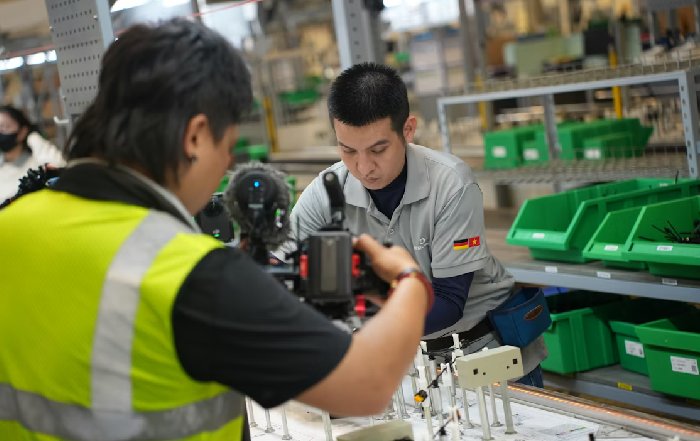
Robotic process automation (RPA) has matured from simple rule-based scripts into intelligent automation platforms that integrate with enterprise systems, learning from human behavior and adapting to changing workflows. In parallel, collaborative robots (cobots) in factories and warehouses across the United States, Germany, China, and South Korea are operating safely alongside humans, augmenting rather than fully replacing manual labor in many tasks. The International Federation of Robotics provides valuable data on global robot density and sectoral adoption, which can be explored through the IFR's industry reports.
For the readers of upbizinfo.com, especially those tracking technology and innovation and their intersection with global markets, the key insight is that automation is no longer a discrete project or IT initiative; it is a pervasive capability woven into the entire operating model, influencing everything from product development and marketing to supply chain design and customer experience.
Sector-by-Sector Impact on Employment
The employment impact of automation varies significantly by sector, geography, and skill level. In manufacturing, particularly in automotive, electronics, and advanced materials, automation has been a long-standing force. Plants in Germany, Japan, and South Korea have some of the highest robot densities in the world, and the integration of AI-driven quality control and predictive maintenance has further reduced the need for certain repetitive tasks. However, advanced manufacturing has also created new roles in robot maintenance, data analysis, and systems engineering, leading to a shift in skill requirements rather than a uniform reduction in headcount. The International Labour Organization has highlighted these trends in its analyses of industrial transformation; readers can explore more at the ILO's future of work portal.
In financial services and banking, automation is reshaping both front- and back-office roles. Algorithmic underwriting, automated compliance checks, and AI-enhanced customer service are now mainstream in the United States, United Kingdom, Canada, and Singapore. This has reduced demand for some clerical and routine processing roles while increasing the need for data scientists, cybersecurity specialists, and digital product managers. Executives tracking this shift can consult resources such as the Bank for International Settlements, which examines how technology is transforming global banking systems. For a more applied perspective on automation in financial services and its implications for business strategy, readers can turn to upbizinfo.com's dedicated coverage of banking and crypto and digital assets.
Retail and e-commerce have experienced a profound automation wave, with warehouse robotics, automated fulfillment centers, and AI-driven recommendation engines redefining roles in logistics and customer engagement. While warehouse and delivery roles are being reconfigured, new employment opportunities are emerging in digital merchandising, last-mile optimization, and omnichannel customer experience. Platforms like the U.S. Bureau of Labor Statistics provide detailed occupational data that reveal how these shifts are playing out in local job markets across North America; executives can explore these trends via the BLS employment projections.
In professional services, including law, accounting, consulting, and marketing, automation is increasingly affecting analytical and research-intensive tasks. Document review, contract analysis, financial modeling, and campaign optimization are being partially automated, allowing professionals to focus more on judgment, client relationships, and complex problem-solving. For those in marketing and digital growth roles, AI-driven tools are reshaping how campaigns are designed, tested, and scaled, a topic that upbizinfo.com explores in depth through its focus on marketing innovation. To stay informed about digital transformation in services, many leaders refer to research from Deloitte, available at Deloitte's insights portal.
Healthcare, logistics, agriculture, and public administration are also undergoing automation-driven change, albeit at varying speeds depending on regulatory frameworks, infrastructure, and investment capacity. In healthcare, AI-assisted diagnostics, automated triage, and robotic surgery support are altering clinical workflows, while administrative automation reduces the burden of paperwork and billing. The World Health Organization has published guidance on digital health and workforce implications, accessible at the WHO digital health resources. In agriculture, precision farming technologies and autonomous machinery are beginning to change labor patterns in countries such as Brazil, Australia, and France, although adoption remains uneven due to capital costs and landholding structures.
Regional Disparities and Global Labor Markets
Automation's effect on employment is deeply shaped by regional economic structures, demographic profiles, and policy choices. In high-income economies such as the United States, United Kingdom, Germany, Canada, Australia, and the Nordic countries, aging populations and tight labor markets have made automation an attractive response to labor shortages in manufacturing, healthcare, logistics, and hospitality. These countries often have stronger training systems and social protections, which can mitigate some of the disruptive effects of job transitions, though not uniformly across all communities or demographic groups. The OECD provides comparative data on automation risk and skills readiness, which can be explored through the OECD's employment and skills analyses.
In emerging and developing economies, including parts of Asia, Africa, and South America, the picture is more complex. On one hand, automation threatens traditional pathways to industrialization that rely on abundant low-cost labor, potentially shortening the window during which countries can leverage labor-intensive manufacturing to move up the value chain. On the other hand, digital platforms, remote work, and services automation create new avenues for participation in global value chains, particularly for countries with strong connectivity and human capital investments, such as India, Malaysia, and South Africa. The World Bank has examined these dynamics in its reports on the changing nature of work, available at the World Bank's jobs and development resources.
China, as the world's largest manufacturing hub, is aggressively deploying automation to offset rising wages and demographic headwinds, while also seeking to lead in robotics, AI, and advanced manufacturing technologies. This strategy has implications for supply chains across Europe, North America, and Asia, as multinational companies reassess their location decisions and risk exposure. Meanwhile, countries like Vietnam, Thailand, and Mexico are navigating a delicate balance between attracting labor-intensive investment and preparing for an increasingly automated global production landscape.
For the global readership of upbizinfo.com, which spans Europe, Asia-Pacific, North America, and beyond, these regional disparities underscore the importance of understanding automation not only as a technological trend but as a strategic variable in investment decisions, site selection, and cross-border talent management. Coverage on world and geopolitical developments and macro-economic trends provides essential context for interpreting how automation interacts with trade tensions, industrial policy, and demographic change.
Skills, Reskilling, and the New Employment Bargain
The most consequential effect of automation on global employment is not simply the number of jobs created or destroyed, but the accelerating shift in skills demanded by employers. Across industries, organizations are placing a premium on digital literacy, data fluency, complex problem-solving, creativity, and social and emotional skills that are harder to automate. Routine cognitive and manual tasks are increasingly handled by machines, while humans are expected to orchestrate systems, interpret outputs, and engage in higher-value activities.
This shift has profound implications for education systems, corporate learning strategies, and public policy. Universities, vocational institutions, and online learning platforms are reconfiguring curricula to emphasize interdisciplinary skills, lifelong learning, and practical exposure to AI and automation tools. Many professionals are turning to large-scale online learning providers for reskilling and upskilling, and platforms such as Coursera and edX have reported sustained demand for courses in data science, machine learning, and digital business transformation.
Employers in the United States, Europe, and Asia are increasingly recognizing that the speed of technological change outpaces traditional hiring pipelines, making internal talent development a strategic necessity rather than a discretionary benefit. Research from PwC and other consultancies has highlighted the return on investment from robust reskilling programs, which can be explored through PwC's workforce of the future insights. For business leaders following upbizinfo.com, the interplay between automation, skills, and labor markets is a recurring theme across coverage areas such as jobs and careers and founders and entrepreneurial leadership, where the ability to build adaptive, learning-oriented organizations is increasingly seen as a competitive advantage.
The emerging employment bargain in many advanced and middle-income economies is that workers are expected to continuously update their skills in exchange for access to higher-value roles and more flexible work arrangements. However, this bargain is only sustainable if employers, governments, and educational institutions share responsibility for providing accessible, high-quality learning opportunities and transitional support for displaced workers. Without such support, automation risks exacerbating inequality and fueling social and political backlash, particularly in regions and sectors where alternative employment opportunities are scarce.
Automation, Inequality, and Social Cohesion
One of the most debated aspects of automation's impact on global employment is its relationship with inequality. Empirical evidence from the last two decades suggests that technology-driven changes in labor demand have contributed to wage polarization in many countries, with strong growth in high-skill, high-wage roles and modest growth or decline in middle-skill occupations. At the same time, some low-wage service roles, particularly those involving non-routine physical tasks and interpersonal interaction, have remained relatively resilient to automation, at least so far.
Institutions such as the International Monetary Fund and OECD have documented how technology, including automation, interacts with globalization, labor market institutions, and fiscal policy to shape income and wealth distributions. Their analyses, accessible via the IMF's research on inequality and the OECD's inequality and inclusive growth work, highlight that the distributional consequences of automation are not technologically predetermined but mediated by policy choices and institutional frameworks.
In advanced economies, regions that are heavily reliant on automatable manufacturing or administrative roles, and that lack strong reskilling infrastructure, have often experienced economic stagnation and social discontent. In parts of the United States, the United Kingdom, and continental Europe, such dynamics have contributed to political polarization and skepticism toward globalization and technological change. In emerging markets, the risk is that automation may limit the growth of formal sector employment, pushing more workers into informal or precarious arrangements unless proactive policies are implemented.
For the leadership audience of upbizinfo.com, which closely follows economic policy and markets as well as lifestyle and societal trends, the lesson is that automation strategy cannot be divorced from considerations of social responsibility, inclusion, and long-term legitimacy. Organizations that invest in inclusive automation-prioritizing worker engagement, transparent communication, and meaningful reskilling pathways-are more likely to maintain trust with employees, regulators, and the broader public.
Policy, Regulation, and the Governance of Automation
Governments and international bodies are increasingly active in shaping the trajectory of automation through regulation, incentives, and public investment. Policy debates in the United States, European Union, United Kingdom, Canada, Australia, and across Asia now routinely address issues such as AI governance, data protection, algorithmic transparency, labor standards in automated environments, and the taxation of capital versus labor.
The European Commission has taken a leading role in crafting regulatory frameworks for AI and digital markets, with implications for how automation technologies are designed and deployed across the EU and beyond. Business leaders monitoring these developments can follow updates through the European Commission's digital strategy pages. In parallel, national governments are experimenting with policies ranging from wage insurance and portable benefits to tax incentives for training and innovation, seeking to balance competitiveness with social protection.
International organizations such as the G20, ILO, OECD, and World Bank are promoting best practices and coordinating research on how to manage the employment effects of automation in a way that supports inclusive growth. Their efforts underscore that no single country can fully insulate itself from the global dynamics of technological change, and that cross-border cooperation on standards, skills recognition, and digital infrastructure is increasingly vital.
For businesses featured and analyzed by upbizinfo.com, the regulatory environment around automation is not a static constraint but a strategic variable. Companies that anticipate regulatory trends, engage constructively with policymakers, and adopt responsible AI and automation practices are better positioned to avoid costly compliance surprises and reputational risks. The platform's focus on news and regulatory developments helps decision-makers interpret the fast-evolving policy landscape across major economies and regions.
Strategic Choices for Business Leaders
In 2026, the most forward-looking organizations treat automation not as an isolated technology decision but as a core element of corporate strategy, talent management, and brand positioning. Executives across sectors are grappling with a set of interrelated questions: how to prioritize automation investments, how to redesign work and organizational structures, how to maintain employee engagement and trust during transitions, and how to align automation initiatives with broader sustainability and ESG commitments.
From a strategic perspective, leading companies are increasingly adopting a "human-in-the-loop" approach, in which automation augments rather than replaces human capabilities wherever possible, and where humans retain ultimate responsibility for critical judgments and ethical decisions. This model not only reduces operational risk but also supports a more positive employee experience, as workers see technology as a tool for empowerment rather than displacement. For insights into how automation intersects with sustainable and responsible business models, leaders can explore guidance from the United Nations Global Compact, which links technology adoption with broader sustainability goals.
Investment decisions are also being reframed. Rather than evaluating automation purely on short-term labor cost savings, sophisticated organizations consider total value, including quality improvements, speed to market, resilience, and the ability to unlock new products and services. For investors and corporate strategists who follow upbizinfo.com's coverage of investment and capital allocation and global markets, automation is increasingly seen as a driver of long-term competitiveness and valuation, provided that human capital risks are managed effectively.
Startups and founders face a distinct set of choices. Many new ventures in the United States, Europe, and Asia are "automation-native," building products and services that rely on AI and robotics from day one. At the same time, they must navigate ethical, regulatory, and societal expectations from investors, customers, and employees who are increasingly aware of the broader implications of automation. For entrepreneurial leaders, upbizinfo.com's focus on founders and innovation ecosystems offers a lens on how automation is shaping not only established corporations but also the next generation of high-growth companies.
The Road Ahead: Navigating an Automated Future of Work
As of 2026, it is clear that automation will continue to reshape global employment, but the precise trajectory remains contingent on choices made by business leaders, workers, educators, investors, and policymakers. The technology will advance, likely at an accelerating pace, as AI systems become more capable and integrated into physical and digital processes. However, the extent to which this results in widespread displacement, inclusive prosperity, or something in between will depend on how societies design the institutions and incentives that govern adoption.
For the worldwide audience of upbizinfo.com, spanning industries from banking and crypto to technology, sustainable business, and global markets, the imperative is to approach automation with both ambition and responsibility. Organizations that invest in human-centric automation, robust reskilling, and transparent governance will be better positioned to harness productivity gains while maintaining trust and social license to operate. Those that treat automation narrowly as a tool for cost-cutting, without regard for workforce development or societal impact, may find that short-term gains are outweighed by long-term risks.
In this evolving landscape, upbizinfo.com serves as a dedicated platform for leaders who need to connect the dots between technological innovation, labor markets, economic policy, and corporate strategy. By integrating insights across AI and technology, employment and jobs, business and markets, sustainable practices, and global developments, it provides a vantage point for understanding not only where automation is heading, but how to navigate its complexities in a way that supports resilient, competitive, and inclusive organizations.
Automation's effect on global employment is neither a simple story of loss nor an unqualified promise of abundance. It is a complex, evolving negotiation between technology and human agency. The decisions taken in boardrooms, classrooms, legislatures, and startup hubs over the rest of this decade will determine whether automation becomes a catalyst for broader opportunity or a source of deepening divides. For business leaders, policymakers, and professionals alike, staying informed, engaged, and proactive is no longer optional; it is central to shaping a future of work that aligns innovation with shared prosperity.