

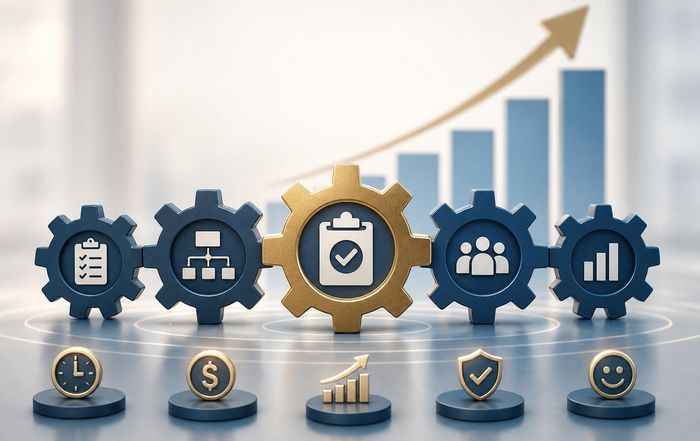
The Business Benefits of Process Standardization
Why Process Standardization Matters More Than Ever
As global markets adjust to sustained inflationary pressures, rapid digitization and increasingly complex regulatory environments, process standardization has moved from being a back-office efficiency initiative to a board-level strategic priority. For the daily, regular, loyal and active readership online here, which spans founders, executives, investors and policy-focused professionals across North America, Europe, Asia and beyond, the question is no longer whether to standardize, but how aggressively and intelligently to do so in order to protect margins, scale operations and strengthen resilience in an uncertain world.
Process standardization, at its core, refers to the systematic definition, documentation and consistent execution of business activities across an organization, from front-office customer interactions to back-office finance and compliance workflows. While this concept is not new, its business impact has been transformed by developments in cloud technology, artificial intelligence, data analytics and global supply-chain integration. Organizations that treat standardization as a strategic capability, rather than a one-off cost-cutting exercise, are increasingly the ones that outperform their peers in productivity, profitability and adaptability. Readers seeking a broader context on how these dynamics fit into the current macro environment can explore the global perspective on the economy and markets presented on the upbizinfo.com economy and markets sections, where process discipline and operational excellence are recurring themes in corporate performance.
Linking Standardization to Strategy, Growth and Valuation
Executive teams in the United States, United Kingdom, Germany, Singapore and other major financial centers are re-evaluating their operating models to support both growth and resilience. Process standardization is emerging as a central lever because it directly influences scalability, cost structure, risk profile and ultimately valuation. Investors and analysts increasingly look for evidence that companies have codified their operating playbooks, not only to reduce execution risk but also to enable faster integration of acquisitions and partnerships, which is crucial in sectors where consolidation remains active, such as financial services, healthcare, logistics and technology.
Organizations such as McKinsey & Company and Boston Consulting Group have long argued that standardized processes are a prerequisite for sustainable operational excellence and digital transformation, and their research suggests that companies with mature process management disciplines outperform peers on return on invested capital and total shareholder return. Executives can learn more about the link between operating models and performance through resources such as the Harvard Business Review and the MIT Sloan Management Review, which regularly analyze how standardized workflows support strategic agility, innovation and cross-border expansion. For readers of upbizinfo.com, this alignment between process discipline and strategic ambition is particularly relevant to founders and scale-ups; the platform's dedicated founders and business pages often highlight how early standardization of core processes can accelerate growth while preserving control and culture.
Operational Efficiency and Cost Optimization
One of the most tangible benefits of process standardization remains operational efficiency. By designing and implementing common procedures across locations, functions and business units, organizations reduce variability, eliminate redundant steps and make it easier to identify and resolve bottlenecks. This is particularly important in industries such as manufacturing, logistics and retail, where high transaction volumes and tight margins make small process improvements compound into substantial savings.
Global frameworks such as ISO 9001 for quality management, maintained by the International Organization for Standardization, provide widely recognized guidance on documenting and improving processes. Leading manufacturers in Germany, Japan and South Korea have long relied on standardized production systems and lean methodologies to reduce waste and defects, and these practices now intersect with digital tools such as industrial IoT platforms and predictive analytics. Business leaders can deepen their understanding of these methodologies through resources from APQC (American Productivity & Quality Center), which benchmark process performance across industries, or through case studies from institutions like INSEAD and London Business School, which explore how process excellence underpins global competitiveness.
For the upbizinfo.com audience, operational efficiency is not only a theoretical concept but a live concern visible across its coverage of technology, investment and world news. Whether examining the cost structures of fintech challengers in the United Kingdom, logistics innovators in Singapore or advanced manufacturers in Germany and Sweden, a recurring pattern is that the most successful players use process standardization to create repeatable, measurable and improvable workflows that can be enhanced by automation and AI rather than relying on ad hoc heroics from individual employees.
Enabling Digital Transformation and AI at Scale
Digital transformation initiatives often fail not because of inadequate technology but because of inconsistent, poorly defined processes that cannot be effectively automated or analyzed. In 2026, as organizations increasingly adopt AI-driven tools, robotics and low-code platforms, process standardization is becoming the critical foundation that determines whether these investments deliver meaningful returns. Without standardized workflows, automation projects become fragmented, data quality remains unreliable and AI models struggle to learn from inconsistent or incomplete inputs.
Leading technology providers such as Microsoft, Google Cloud and Amazon Web Services emphasize process mapping and standardization as essential prerequisites for successful cloud migration and intelligent automation. Industry reports from Gartner and Forrester highlight that enterprises with high process maturity are better positioned to deploy robotic process automation (RPA), document understanding tools and AI-driven decision engines, because the underlying activities are already well documented, measured and governed. Business leaders can learn more about how AI depends on structured processes through resources from the World Economic Forum, which explores the intersection of AI, productivity and governance in its insights on the future of work and digital economies.
For upbizinfo.com, which features a dedicated focus on AI and technology, the relationship between process standardization and AI adoption is a central editorial theme. Case studies of banks in Canada, insurers in France or e-commerce players in the Netherlands frequently reveal that the most advanced AI use cases, such as real-time fraud detection, personalized marketing or predictive maintenance, rely on standardized data flows, clear process ownership and consistent execution across channels and regions. In this sense, process standardization does not constrain innovation; it creates the stable platform on which digital innovation can scale safely and reliably.
Strengthening Risk Management, Compliance and Governance
In a world of tightening regulatory scrutiny, heightened cybersecurity threats and growing stakeholder expectations around transparency, standardized processes are a powerful tool for managing risk and demonstrating compliance. Regulators in the United States, United Kingdom, European Union and Asia increasingly expect financial institutions, healthcare providers and critical infrastructure operators to maintain clear documentation of key processes, define control points and evidence consistent execution. Failures in this area can lead to significant fines, reputational damage and even personal liability for senior executives.
Financial-sector regulators such as the U.S. Federal Reserve, the European Central Bank and the Monetary Authority of Singapore consistently emphasize the importance of robust internal controls and standardized risk-management processes in areas such as anti-money laundering, credit risk assessment and operational resilience. Organizations that adopt standardized workflows for customer onboarding, transaction monitoring and incident response can demonstrate more effectively that they are managing risks systematically rather than reactively. Professionals interested in the intersection of regulation and process discipline can learn more from resources provided by the Bank for International Settlements and the Financial Stability Board, which examine how consistent processes contribute to systemic stability.
The editorial coverage on upbizinfo.com often highlights how process standardization supports risk management across banking, crypto and broader news topics. For example, as digital-asset firms in Switzerland, Singapore and the United Arab Emirates seek to build institutional trust, standardized custody, trading and reporting processes become essential to satisfy regulators and institutional investors. Similarly, in the corporate sector, standardized cybersecurity incident response procedures, aligned with frameworks from organizations like NIST (National Institute of Standards and Technology), help companies in sectors from manufacturing to retail demonstrate that they manage cyber risk in a structured and repeatable manner.
Enhancing Customer Experience and Brand Consistency
For global and regional brands operating across multiple countries, service lines and channels, process standardization is a critical enabler of consistent customer experience. Whether a customer interacts with a bank branch in New York, a call center in Manila or a digital app in Berlin, standardized service and escalation processes help ensure that the experience reflects the brand's promise and meets regulatory and ethical expectations. This consistency is particularly important in sectors such as financial services, hospitality, retail and telecommunications, where customer trust and loyalty depend heavily on predictable service quality.
Leading customer-centric organizations such as Amazon, Apple and Starbucks are known not only for their brand strength but also for the rigorous standardization of their customer-facing and back-end processes, from order fulfillment to complaint resolution. Research from Deloitte and PwC indicates that organizations with well-defined and standardized customer journeys tend to achieve higher Net Promoter Scores and lower churn, because employees understand exactly how to respond to common scenarios and exceptions. Business leaders seeking to improve customer experience can explore practical guidance from the Customer Experience Professionals Association (CXPA) and the Service Design Network, which highlight how standardized processes and service blueprints underpin memorable and reliable customer interactions.
For the upbizinfo.com audience, which includes marketing leaders and brand builders, the connection between process discipline and customer experience is frequently explored in the platform's marketing and lifestyle coverage. In a world where customers in Canada, Australia, Spain or South Africa expect frictionless digital experiences, organizations that standardize their onboarding, support and retention processes can move faster to introduce new offerings while maintaining a coherent and trustworthy brand presence across touchpoints.
Supporting Global Expansion and Cross-Border Operations
As companies expand into new markets across Europe, Asia, Africa and the Americas, process standardization becomes a key enabler of scalable and compliant growth. When core processes such as procurement, finance, HR, sales operations and customer service are standardized, organizations can replicate proven operating models in new geographies more quickly, reducing the time and cost required to reach profitability. At the same time, standardization provides a common language and set of expectations across diverse teams, making it easier to coordinate cross-border projects and share best practices.
International organizations such as the OECD and the World Bank have documented how standardized business processes and regulatory frameworks can reduce barriers to trade and investment, particularly for small and medium-sized enterprises seeking to participate in global value chains. Multinational corporations often rely on shared service centers and global business services models, where standardized processes allow activities such as accounting, payroll or procurement to be centralized in cost-effective locations without sacrificing quality or control. Business leaders can explore further insights from the World Trade Organization, which examines how process and regulatory harmonization can increase efficiency and predictability in cross-border commerce.
On upbizinfo.com, global expansion is a recurring theme across world and business reporting. Profiles of companies entering markets such as Thailand, Brazil or the United Arab Emirates frequently reveal that those with standardized operating playbooks can adapt more quickly to local conditions while preserving core processes for financial control, compliance and brand consistency. In this way, process standardization supports both global integration and local responsiveness, enabling organizations to balance efficiency with market-specific customization.
Empowering Employees and Improving Workforce Experience
Contrary to the misconception that standardization stifles creativity, well-designed standardized processes can actually empower employees by clarifying expectations, reducing ambiguity and freeing up time for higher-value activities. When routine tasks such as expense approvals, onboarding, reporting or basic customer inquiries are standardized and often automated, employees can focus on problem-solving, relationship-building and innovation, which are increasingly critical in knowledge-intensive roles across sectors and geographies.
Research from organizations such as Gallup and the Chartered Institute of Personnel and Development (CIPD) indicates that clarity of role and process is strongly correlated with employee engagement and performance. Standardized workflows help reduce the cognitive load associated with figuring out how to get things done in complex organizations, particularly for new hires or employees working remotely across different time zones. For HR leaders, standardized talent processes in recruiting, performance management and learning and development also support fairer, more transparent and data-driven people decisions, which is essential in addressing skills shortages and promoting diversity, equity and inclusion.
The employment-focused content on upbizinfo.com, including its employment and jobs sections, frequently highlights how process standardization intersects with the future of work. As hybrid and remote work models remain prevalent in countries such as the United States, United Kingdom, Canada, Sweden and New Zealand, standardized collaboration, approval and communication processes help maintain productivity and cohesion across distributed teams. At the same time, employees benefit from clearer career pathways and development opportunities when HR processes are consistent and transparent across business units and regions.
Driving Better Data, Analytics and Decision-Making
High-quality, comparable data is the lifeblood of modern management, and process standardization is one of the most effective ways to improve data integrity and usability. When processes are executed consistently, with standardized inputs, outputs and data definitions, organizations can trust their metrics, benchmark performance across units and identify patterns that would otherwise remain hidden. This is particularly important for multinational enterprises operating across Europe, Asia and the Americas, where differences in local practices can easily distort aggregated data if processes are not harmonized.
Analytics leaders often emphasize that "bad processes produce bad data," and this reality becomes evident when organizations attempt to implement advanced analytics, AI or real-time dashboards on top of fragmented workflows. Institutions such as the Data Management Association (DAMA International) and the EDM Council advocate for process standardization as a central pillar of data governance, while business schools and think tanks such as Wharton and The Conference Board explore how reliable data supports better strategic and operational decisions. Executives seeking to understand how to build data-driven organizations can also turn to resources from OECD and UNCTAD, which analyze how data quality and governance affect productivity and innovation across economies.
For upbizinfo.com, which regularly covers investment and market trends, the link between standardized processes and reliable performance data is particularly salient in its investment and economy coverage. Investors evaluating companies in sectors from fintech to renewable energy in markets such as Germany, Denmark, Japan or South Africa increasingly scrutinize the quality and consistency of operational and ESG data. Organizations that have standardized their reporting processes, including ESG and sustainability disclosures, are better positioned to meet the expectations of regulators, investors and customers, and to participate in evolving frameworks such as those promoted by the International Sustainability Standards Board (ISSB) and the Global Reporting Initiative (GRI).
Enabling Sustainable and Responsible Business Practices
Sustainability has moved firmly into the mainstream of business strategy, and process standardization plays a vital role in embedding environmental, social and governance (ESG) considerations into day-to-day operations. To reduce carbon emissions, manage resource use or uphold human-rights commitments across complex supply chains, organizations need standardized procedures for measuring impacts, setting targets, engaging suppliers and reporting progress. Without such processes, sustainability efforts risk remaining isolated projects rather than integrated elements of the operating model.
International frameworks such as the UN Global Compact, the Task Force on Climate-related Financial Disclosures (TCFD) and the Science Based Targets initiative (SBTi) encourage companies to adopt systematic, standardized approaches to measuring and managing sustainability performance. Companies in industries ranging from automotive in Germany and Japan to mining in South Africa and Chile are developing standardized processes for energy management, waste reduction and supplier audits, supported by digital tools and data platforms. Business leaders can learn more about sustainable business practices through resources from organizations such as the World Resources Institute and the Ellen MacArthur Foundation, which explore how process redesign supports circular-economy models and low-carbon operations.
The sustainability-focused content on upbizinfo.com, particularly its great sustainable coverage, frequently illustrates how process standardization underpins credible ESG strategies. Whether examining green-finance initiatives in Switzerland, renewable-energy investments in Spain or sustainable supply-chain practices in Southeast Asia, a consistent pattern emerges: organizations that standardize their sustainability-related processes, from data collection to supplier engagement, are better able to set realistic targets, track progress and communicate transparently with stakeholders across global markets.
Process Standardization as a Competitive Advantage!
In the evolving business landscape of 2026, process standardization has become a multi-dimensional strategic asset rather than a narrow efficiency tool. It enables organizations to scale across borders, adopt AI and automation effectively, manage risk and compliance, deliver consistent customer experiences, empower employees, generate reliable data and embed sustainability into everyday operations. For the global business community served by upbizinfo.com, spanning entrepreneurs in Toronto and Berlin, executives in Singapore and Sydney, and investors in London and New York, the message is clear: process standardization is no longer optional; it is a foundational capability for enduring competitiveness.
As upbizinfo.com continues to expand its 100% original coverage across business, banking, technology, world and sustainable themes, process standardization will remain a unifying thread running through its analysis of corporate strategies, market developments and policy debates. By highlighting real-world examples from diverse regions and sectors, and by connecting operational practices to broader economic and societal trends, the platform aims to equip its readers with the insights needed to design and implement standardized processes that support growth, resilience and responsible business in an increasingly complex global environment.
Organizations that recognize process standardization as a core element of their operating model, and that invest in the necessary governance, technology and change-management capabilities, will be better prepared to navigate volatility, seize new opportunities and build trust with stakeholders. In doing so, they align themselves with the emerging consensus among leading thinkers, institutions and practitioners worldwide: that disciplined, standardized processes are not the enemy of innovation, but rather the infrastructure on which sustainable, data-driven and human-centered innovation can thrive.